Happy Hungover from the Holidays Monday! To be completely honest, this is one of the last things I want to be doing right now. It’s Sunday night and I have to go back to work tomorrow after being gone for a week for our annual Christmas trip to Iowa. I’d rather be half-assed engaged in a book or a movie or any other activity that would allow me to zone out instead of concentrating on writing. BUT, here I am. I am sitting on my couch in my robe and slippers on a Sunday evening writing this blog because I have realized that we sisters, we dissident daughters, do not just use this blog to convey our grandiose thoughts and tirades to the Facebook community. No, more importantly, we use it to talk to each other, to connect with each other and in some ways it’s our own private little way of writing our not-so-private diaries and letting the other sisters read it each week. I have a feeling that soon we may even need the blog as a historical reference. We’ll go back some day and read some of these blogs together and say, “Oh, I totally forgot about that time we _____ (fill in the blank)!”
5 sisters. 5 women. So similar. So different. Sharing their experiences with the world.
An Alesch Family Christmas
Happy Hungover from the Holidays Monday! To be completely honest, this is one of the last things I want to be doing right now. It’s Sunday night and I have to go back to work tomorrow after being gone for a week for our annual Christmas trip to Iowa. I’d rather be half-assed engaged in a book or a movie or any other activity that would allow me to zone out instead of concentrating on writing. BUT, here I am. I am sitting on my couch in my robe and slippers on a Sunday evening writing this blog because I have realized that we sisters, we dissident daughters, do not just use this blog to convey our grandiose thoughts and tirades to the Facebook community. No, more importantly, we use it to talk to each other, to connect with each other and in some ways it’s our own private little way of writing our not-so-private diaries and letting the other sisters read it each week. I have a feeling that soon we may even need the blog as a historical reference. We’ll go back some day and read some of these blogs together and say, “Oh, I totally forgot about that time we _____ (fill in the blank)!”
Holiday Magic
I'm scattered. I'm thinking about a million things right now and don't really have a good feel about what I want to write about. I want to write about how saying you are too busy for someone or something is really a way of saying the activity or person you are declining is not a priority. I know that's harsh and you may be too busy because you have other things going on but i do think there needs to be some accountability before this statement is uttered as a reason for declining an invitation. If you are too busy because you have company or another event or need time with your children, I can understand that and I won't argue with your priorities. But we, as a society, have gotten into the habit of relying on "I'm just too busy" as our get out of jail free card for when we don't have the personal courage to admit we simply do not want to make the effort to attend. That is what I have issue with. That the line is used to brush people off without having to be accountable for our own personal choices and priorities. I'm too busy, when used in this fashion, allows us to avoid personal responsibility for our choices and can be offensive and harmful to the receiver.
I want to write about how women need to stop being dependent on others from a financial perspective because such a situation usually only finds an end in desperation and weakness. I see many women who are unhappy because their great provider flaked out on them or because they need to stay in a semi-abusive relationship because they can't afford the alternative. Dig in Ladies. Sack the fuck up. Find a way to make ends meet on your own. Can you ever really be happy if you have created your own prison? Yes, it sucks. Yes, it's hard. But the alternative is worse in my opinion and I want to end the dependency keeping in mind that a partnership is different than dependency.
But. But. But. Neither of these topics feels right, at least not right now. Maybe both hit a little too close too home. Maybe I'm not ready to poke the bear on these topics. Maybe I'm still angry because both of these issues have interfaced with my life recently. To be honest, I'm not sure. But instead of forcing it, I am instead going to write about Santa Claus...Old Saint Nick...that jolly old fellow whom we tell children to believe in and later, after years of deception, bewilder those same children with the reality that we told them to believe in something that was completely and utterly false.
Perhaps this is a morose look at the toy-building, north-pole living, red- suit wearing fantasy that we, generally without question, spew forth to our children. Many children simply accept the lie and the later truth and move on without missing a beat. For me, I remember feeling crushed, then guilty that I had asked for so much, and then stupid for having thought there was somehow a universal equalizer who brought toys to children based on the amount of their internal goodness instead of the amount of money in their parents' bank accounts. I remember thinking of all the people who had told me, without missing a beat, that Santa was real. Who were these sick freaks that lied to children? I didn't understand why adults would create such a wonderful story just to have to reveal it was false. And yes, I went here: If Santa wasn't real, was it possible God was a myth, too?
Yeah, I know I probably over thought it. I was an asshole even back then. Maybe it was undiagnosed autism or aspergers or hypersensitivity or some other weird ass spectrum disorder that made me unable to simply accept that every kid was lied to about Santa. I wish I wasn't this way, trust me. But, because I am this way, I can't help but wonder if this is the result we really intend to have or should intend to have with our children. Do we really want to insist that our children believe? Why do we do this? Is it for our children or is it for us? Can we create Holiday magic without the lie? Who is the lie for? Are the memories of Santa and the excitement a child feels sufficient to make up for the fact we teach our children to believe in something false? For most kids, probably. The Elves on the Shelves, the toys at Christmas, all of it creates such wonderful memories that most children are ok with the whole charade and pass it along to their kids in turn. But, I think like all things, we have to consciously be aware of who our children are and what is best for them based on that. We can't simply do what everyone else does out of habit or laziness or just because we have always done it that way. We have an obligation to know our children and do what is best for them, not what is easiest or better for us as the parents.
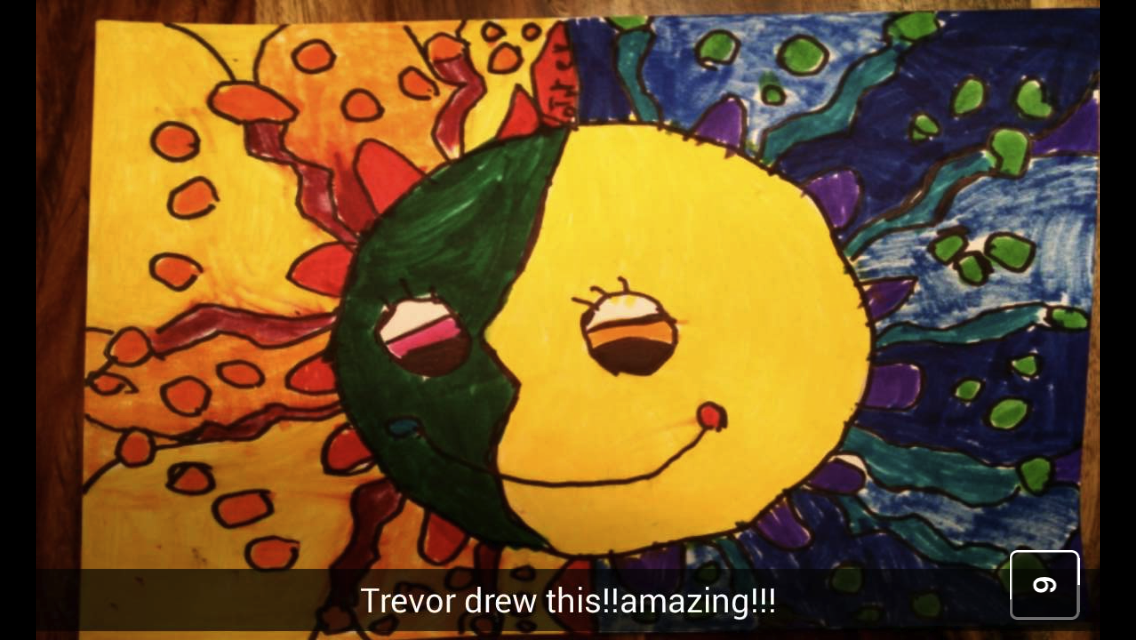
My son is six and he, unfortunately, is much like me in demeanor and mind. Trevor does not believe in Santa. There. Be appalled. Judge me as ruining his childhood. I know that's a typical reaction. In fact, my husband had this reaction. But I'm standing firm on this one. I know my son. The reality is that my son has challenged me since the day he was born. He is literal to a fault and has been diagnosed as hypersensitive which explains why he was colicky and why he sometimes wakes up and he feels all wrong inside and his brain is telling him to be naughty today (his words). He is an old soul and a unique person with very special needs, much like I was. His brain is always turning, trying to figure things out. He asked me about the meaning of life at age 4. He wanted to know why people died and what happens in heaven at the same age. He wondered why heaven was in the sky when we knew it was just sky and nothing more. He continues to challenge me with questions about whether dinosaurs are in heaven and how do we know they really lived because someone could have just put those bones there to trick us. Touche, Trevor. He said to me the other day, "Don't you just ever think about how weird it is that we are alive? You know, that we are even here at all?" And I tell him, "Yes, I do,"and that is the truth. I tell him part of the beauty of life and death is the mystery of it all. But I do feel like I don't have any answers and that I'm failing him sometimes. That's not going to change so what I have told him, unequivocally, is that while I may not have all the answers I will always always be honest with him and do my best to answer his questions honestly.
As a result, I began to fancy myself as the purveyor of truth to my son. He could ask me the tough questions and he did. Questions about God, Jesus, heaven, hell, dinosaurs, and many others came pouring in. And although I can't solve the question of why dinosaurs went extinct or why they were alive to begin with, or how the Earth was created, I felt like the honesty thing was working really well for me up until my son asked me if Santa was real.
I wanted to avoid the lie of Santa. I wanted to continue the wide -eyed excitement of Christmas morning. But I was the self-proclaimed purveyor of truth. And I couldn't reconcile those two positions, at least not with knowing how my son thinks and experiences his world. After about a minute of reflection, because that's literally all I had, what I realized was that all reasons I wanted to lie were reasons that were selfish or specific to me but not in my son's best interest at all. So I told Trevor the truth. I told him that we had promised each other that we would be honest with each other no matter what. And so I was going to tell him the truth. So the self-proclaimed and oh-so-humbled purveyor of truth said to her son that Santa wasn't a person like we are led to believe. In fact, Santa didn't bring presents or live in the North Pole. But Santa was real in the sense he represented and stood for the feeling of love and the magic of giving and receiving presents from a loved one. And in that case, everyone could be excited about Christmas and we didn't need Santa to be excited. Christmas was magical because it symbolized love.
My son did not cry or even bat an eyelash. In contrast, I remember being devastated and crying when i found out that there really wasn't a red-suited, toy-hocking man who had the ability to break into every house in the world one night a year to deliver presents. But Trevor simply said; "Oh. So where DO the presents come from?" I responded that his mom and dad love him very much and WE give him the presents. He beamed. "You love me that much?" he asked. I assured him we did and would continue to do so. My son left feeling loved and seemingly unscathed. I left feeling glad I had not lied to my son or threatened him that if he didn't believe in something he would not get presents. Instead, my son began, on that day, to associate Christmas presents with the love John and I and others feel for him. We still play Elf on the Shelf but it's a game between Trevor and I, and it is still fun and magical because it is played out of the love between a mother and a son. I don't need a myth to have the magic. It's there on its own and it always has been.
Many people who hear that story think it's crazy and accuse me of ruining Christmas for my son. I understand, but I respectfully disagree. My son is like me. He believes, without reservation or hesitation, that people should not lie. He believes in me and trusts in me and I don't want to change that despite the fact it has sometimes backfired. I'm reminded of when my son asked me what the "F" word was and I told him because I wanted him to hear it from me rather than his friends. But the next day my son said "Fuck," to my husband. When my husband asked who taught him that and Trevor said, "My mommy," I couldn't deny it. So it hasn't always worked out perfectly. But for the most part, I'm happy with being the self-dubbed purveyor of truth.
Since having that conversation with Trevor, which also led to the big reveal about the Tooth Fairy and the Easter Bunny as well, I have heard my son tell adults who ask him about Santa that Santa is not real and that Santa is just more like a feeling. I'm proud to hear him say that. I'm proud he is not upset. I'm proud I didn't lie to him or force him to believe in a myth for my own gain. This is an unpopular view, I know. But I know my son, and I'm confident I did the right thing. I overheard my son tell his Aunt Molly that the Tooth Fairy wasn't real and that his mom told him it was more just like a feeling because we were honest with each other in our family. And I smiled. I smiled even bigger when later that night Trevor came out of his bed to ask for water and when I tucked him back in he stopped me and said, "Mom, to be honest, like you are all the time, I snuck my IPad into bed with me and have been playing this whole time. I got a new guy and I told myself after I went to bed, 'Trevor, that was a good plan.'" I laughed and was happy he had told me the truth. I don't need an imaginary white bearded, cookie eating, sleigh riding myth to show my son the magic of Christmas. Love shows us the magic every single day. That's something even adults can feel magical about.
"Thank you God, for this good life, and forgive us if we do not love itenough."--Garrison Keillor
Wall Street to Walmart
To Be, or Not to Be...Busy
"When all is said and done, a lot more is said than done."A couple of weeks ago my sisters suggested that on my next turn to blog I write about my trip to the World Series. So here goes! So exciting! We flew out on Tuesday morning, we checked into the hotel, we ate some delicious Kansas City BBQ, we listened to the Commissioner of Major League Baseball speak at the VA, we went to batting practice, we saw the Royals get romped in Game 1, we went to sleep, and then flew back home the next day. And there you have it! Blog= donezo! That was easy!
Let's Have a Discussion...About Discussion
What is the purpose of dialogue? What is the difference between a lecture and a fruitful discussion? Because two sides are talking or yelling, is a dialogue really taking place? If so, if it's not respectful, how effective is it?
I'm writing the introduction to this post on Election Day and the relevance of the topic of our first group post-the purpose and value of respectful dialogue-stares me starkly in the face. Though today's topic was prompted by recent comments and discussions on last week's blog, it is far too evident the US populace at large could do with a little soul searching on this topic. In all but some circles, I believe we have lost sight of the purpose and value of respectful dialogue. As a group, my sisters and I decided we would post our collective thoughts on why respectful dialogue is important and how we have come to learn and experience this in our own lives. Some thoughts may be repeated, as we write independently of one another and I think if a point is made more than once, there is likely a reason.Amy:
I wasn't taught the value of respectful dialogue when I was growing up. Honestly, until the past five years of my life, in most situations I was in where opinions differed, I believed my options were yelling or avoiding the situation (either by walking away or shutting down and not speaking my mind). Through counseling and relationships with emotionally mature people, I have learned the value of respectful dialogue.
This is one of the most beautiful gifts I have been given and skills I have learned in my life so far. In my opinion, it takes fortitude and courage to have a respectful dialogue with someone. Blowing someone out is easy-it tends to cut off any additional discussion because the other party will usually either shut down or respond defensively to an attack. The root of the problem will rarely be addressed in this type of interaction, the relationship will not grow and neither party will grow as an individual.
A healthy dialogue takes work. It takes compassion and the willingness and ability to listen. It takes fortitude and courage to state calmly and respectfully an opinion that might be different from many others' opinions or an opinion that might be different from someone you care deeply about. The initial difficulty and discomfort is worth it. In each situation in which I have had a respectful dialogue, I have come away from the interaction with a deeper understanding of the other person, myself, our relationship and the relationship was stronger for it...in both personal and professional relationships. If we want to grow as individuals, in relationship, as communities and as a society, learning the skills of respectful dialogue is essential.
Jill:
Molly:
Hi! Molly, the middle sister, here. Having an open, respectful dialogue with someone who may not share your viewpoint or ideals can be frightening and uncomfortable. Many people avoid open dialogues at all costs for fear that they may be “wrong.” This is somewhat understandable; respectful, two-way conversations can put you in a very vulnerable position as you might have to admit that you are incorrect, that you don’t know everything, and that you still have so much to learn about yourself, other people and this beautiful world of which we are blessed to be part.
However, to me, the ability to have an open, respectful dialogue is the mark of a person who has courage. The word courage comes from the Latin word “cor” which means heart. The original definition, according to Brene Brown- one of my favorite authors- was to tell the story of who you are with your whole heart. Opening yourself up for respectful dialogue is courageous- you are showing the other person who you are with your whole heart. You are laying yourself bare naked on the table of conversation and saying “Hey, I might not know everything. I am vulnerable which also makes me courageous and wholehearted. But being vulnerable, courageous and wholehearted is what connects us as human beings and I want to connect with you.” Thus, I believe that the ability to have an open, respectful dialogue is what ultimately connects us to other human beings. And that, after all, is what life is all about-human connection.
Anne:
I could analyze for hours the reasons why it is difficult to have open, respectful dialogue. I think that we have significant emotional stake in our opinions, and our belief in their “truth” helps us construct meaning and understanding. I think that we dislike oppressive structures telling us what to think, and so we have created a culture that highly values individual truth. I think that we have had very little experience or wisdom regarding how to have conversations about these topics, and so we have a tendency to avoid them. I could pontificate for hours, but the point is this- it is difficult to have open and respectful dialogue, which is all the more reason that we need to both 1) discuss its relevance; and 2) practice it.
Ultimately, I do not think that any of us has all the answers. Within my own life, I know that I have changed my mind on several topics as I have grown and evolved. Sometimes it has been a complete 180 shift; other times, I have just nuanced my opinion slightly. I do not have all the answers, you do not have all the answers. Your pastor, counselor, government official, professor, mother, nor anyone else has been granted an all-access pass to truth. I believe that greater wisdom is located in a plurality of experiences and knowledge; the more we are able to talk to one another, the more we are able to grow in shared human wisdom.
Kristen:
I think this is something everyone needs to work on because anytime that a discussion or topic sets you off, there is a personal reason why it set you off to begin with. You may not even know exactly what the reason being for that particular theme to set you off at the time was. This is why it is so incredibly important to self reflect and ask yourself why did that particular statement make me feel hurt and/or sad and/ or angered? Odds are that that particular statement might have struck an area within yourself or a particular area in your life that you already felt a certain way about which then triggered the defensive part of you to come out.
I think another important thing, yet very difficult idea to come to terms with is that sometimes you have to agree to disagree with somebody. Be humble enough to accept the fact that you are not going to change somebody's mind because as you have had your experiences that have shaped your opinions, they have too. It is okay to end a discussion without thinking exactly what the other party thinks; as long as both parties' views were equally shared and listened to, the discussion was a success. Everyone has their own voice and wants it to be heard without someone there to belittle what they believe in. In order to continue to grow we need to respectfully discuss and in order to respectfully discuss we need to continue to grow. <3
Featured Post
Meaning-Making
I’m almost 38 years old. Here’s what I’ve learned and experienced about life as I age. The older I get, the more intensely I feel things. ...
-
Women, I want us to stop giving our power to men. I had a completely different post in mind for the past week and my rage about this topic h...
-
The world, myself included, was shocked by Robin Williams' suicide. News reports revealed he had privately struggled with depression and...
-
Seriously.... UGLY . I recently painted my entire apartment. Living room, dining room, hallway, and kitchen. I pain...